













May is Mental Health Awareness Month — a time to talk openly about what weighs on people. And right now, one of the heaviest weights is money.
A 2025 study found that 69% of Americans say financial uncertainty has made them feel depressed or anxious — up 8 percentage points from 2023. Nearly two-thirds say it has disrupted their sleep. Nearly half report that it has affected their job performance. These aren’t abstract statistics. They describe how a significant portion of the population is actually living.
This year’s Mental Health Awareness Month theme from Mental Health America is “More Good Days, Together” — a recognition that wellbeing is built through stability, connection, and a sense of control. Insurance, at its core, is one of the few tools that directly addresses the financial unpredictability that fuels so much of that anxiety.
The Link Between Coverage Gaps and Mental Health
The connection between financial insecurity and poor mental health is well-documented. A 2025 CDC analysis found that depression rates are roughly three times higher among lower-income Americans than higher-income groups — and financial stress, regardless of income level, compounds that risk.
Among the most anxiety-producing financial exposures are the ones that are sudden and uncontrollable: a major home insurance claim after a storm, a car accident that triggers a lawsuit, the loss of income following an illness or injury. These aren’t low-probability hypotheticals. They are the events that personal insurance exists to address.
Nearly 1 in 3 homeowners say they’re not confident they can maintain adequate insurance coverage through 2026. Only 19% of Americans have individual disability insurance, despite the fact that 1 in 4 workers will face a disabling condition before retirement. These gaps don’t just represent financial risk — they represent a persistent background hum of anxiety for millions of families.

What ‘Adequate Coverage’ Actually Feels Like
There’s a meaningful psychological difference between having insurance and knowing your insurance is right.
Many people carry policies they set up years ago and haven’t reviewed since. Their dwelling coverage may no longer reflect current rebuild costs. Their auto liability limits may be far below what a serious accident could generate. They may have no income protection if a disability keeps them out of work for six months.
The anxiety that comes from not knowing whether you’re actually protected is different from the anxiety that comes from a known, specific gap. The first can be addressed by doing a comprehensive review. The second requires closing the gap.
A Mental Health Month Prompt Worth Taking
This May, the most concrete mental health action many families could take has nothing to do with therapy or mindfulness apps. It’s a 30-minute conversation with an insurance professional.
Are your home and auto liability limits still appropriate for where your life is now? Do you have income protection if you couldn’t work for three months? Six months? Is your life insurance coverage sized for your current obligations? Are there gaps you’re quietly aware of but haven’t addressed?
The goal isn’t to spend more on insurance. It’s to close the gaps that are generating low-grade financial anxiety — often in exchange for surprisingly affordable protection.
Our personal lines team and life insurance advisors are here to help you move from “I think I’m covered” to “I know I’m covered.” That shift is worth more than most people realize — including for your peace of mind.
Ready to replace financial uncertainty with real clarity? The team at Tooher-Ferraris has been helping families build stable financial foundations since 1932. Contact us today to schedule a no-obligation consultation.
Think about the insurance policies you carry right now. Homeowners. Auto. Maybe a pet policy. You protect the things that matter — and that makes sense.
But here’s a question most people can’t answer comfortably: What happens to your family if your paycheck disappears?
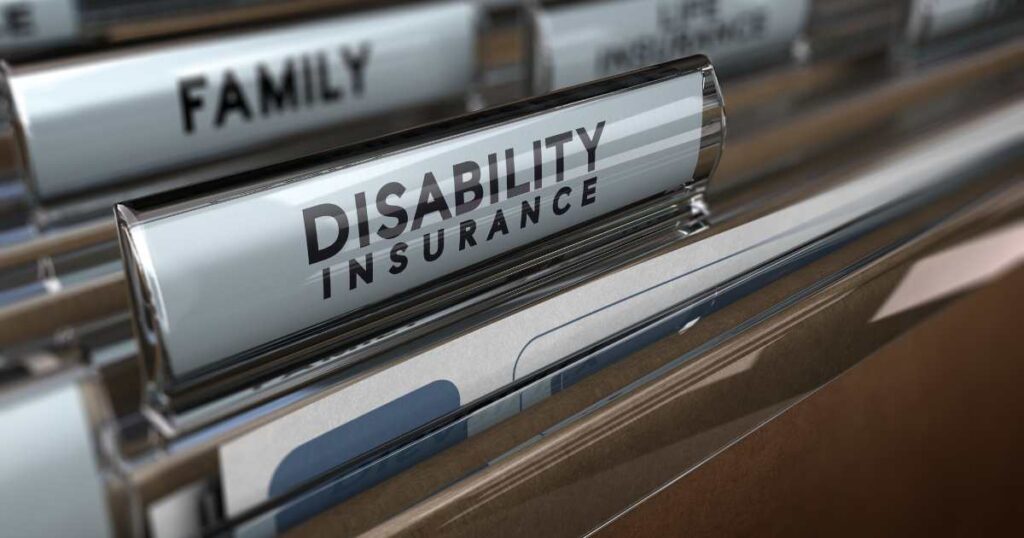
That’s the gap that Disability Insurance Awareness Month (DIAM), observed every May, is designed to close. And this year, the numbers behind that gap are harder to ignore than ever.
The Coverage Gap Nobody Talks About
According to the 2025 Insurance Barometer Study by LIMRA and Life Happens, only 19% of Americans say they have an individual disability insurance policy — and LIMRA estimates the true ownership rate may be even lower, since many people confuse employer-sponsored coverage with individual protection they actually own.
Meanwhile, 46% of U.S. adults acknowledge they need disability insurance. That’s a staggering disconnect — and a financially dangerous one.
The Social Security Administration puts it plainly: today’s 20-year-olds have a 1 in 4 chance of experiencing a disabling condition before reaching retirement age. Disabilities don’t just come from workplace accidents. They come from cancer diagnoses, heart attacks, mental health conditions, and degenerative diseases — the kinds of events nobody sees coming.
What ‘Disabled’ Really Costs
When most people imagine disability, they picture a dramatic accident. The reality is far more mundane — and far more financially devastating. The leading causes of long-term disability claims are musculoskeletal disorders, cancer, and cardiovascular conditions, according to the Council for Disability Awareness.
If the primary wage earner in your household became disabled tomorrow and couldn’t work for six months, what would happen? The 2025 Barometer Study found that 51% of Americans would tap personal savings, and 32% would turn to family members for financial support. Retirement funds — the resources people spend decades building — would be raided by 26%.
None of those are sustainable strategies. They’re survival tactics.

Employer Coverage Has a Critical Flaw
Many workers assume they’re covered because their employer offers short-term or long-term disability benefits. That assumption deserves a closer look.
Employer-sponsored disability plans are tied to your job. If you leave, get laid off, or your company restructures its benefits package, that coverage disappears with you. An individual disability insurance policy, by contrast, is portable — it follows you regardless of where you work or whether your employer offers benefits at all.
This distinction matters enormously for contractors, freelancers, small business owners, and anyone whose career path isn’t perfectly linear. Your mortgage doesn’t care who your employer is. Neither does your car payment.
What to Do This Month
Disability Insurance Awareness Month is a useful prompt to do something many people keep postponing: actually assess whether your income is protected.
Start by understanding what you have. Review any disability coverage through your employer — specifically the benefit amount, the elimination period (how long you wait before benefits kick in), and the benefit duration. Then ask whether that coverage would genuinely replace enough income to cover your fixed expenses.
If the answer is uncertain, or if you’re self-employed without any coverage at all, an individual policy deserves serious consideration. Premiums are typically more affordable the younger and healthier you are when you apply.
At Tooher-Ferraris, our personal lines specialists and life insurance advisors can help you evaluate your current coverage position and identify gaps before they become crises. May is the right time to have that conversation.
Ready to protect your most valuable asset? The team at Tooher-Ferraris has been helping individuals and families secure their financial future since 1932. Contact us today to schedule a no-obligation consultation.

Ask most middle-class families whether they have umbrella insurance, and you’ll hear some version of: “That’s for people with a lot more to lose than we do.”
That assumption is wrong — and in today’s liability environment, it’s getting more expensive to be wrong about it.
A personal umbrella policy is one of the most affordable and underutilized protections available to American families. Here’s what people consistently get wrong, and what the reality looks like in 2026.
Myth #1: “I’m Not Wealthy Enough to Need Umbrella Coverage”
This is the most common misconception, and it fundamentally misunderstands what umbrella insurance protects against.
An umbrella policy doesn’t primarily protect your existing assets — it protects your future earnings. If you’re found liable for a serious accident and a judgment exceeds your auto or homeowners liability limits, the plaintiff can pursue your wages, your savings, and even your future income. This risk applies to any working adult, not just those with significant wealth.
A $1 million personal umbrella policy typically costs between $150 and $400 per year — often less than a monthly streaming bill. For that price, you get an additional $1 million of coverage above your existing auto and home policies.
Myth #2: “My Auto and Home Policies Have Plenty of Liability Coverage”
Standard homeowners policies typically include $100,000 to $300,000 in personal liability. Auto policies often carry similar limits. Those amounts sound significant — until you consider the liability landscape of 2026.
Nuclear verdicts (jury awards exceeding $10 million) have increased dramatically over the past decade, driven by what the insurance industry calls “social inflation” — growing jury sympathy for plaintiffs and skepticism toward large institutions. A serious car accident, a guest injured on your property, or a dog bite incident can generate claims that far exceed standard policy limits.
According to the Insurance Information Institute, the average auto liability judgment in contested cases has risen sharply, with jury awards regularly surpassing the liability limits carried by most individuals.

Myth #3: “I Don’t Have Any High-Risk Exposures”
Consider what most families actually have: a car (or two), a home where guests visit, a backyard pool or trampoline, a dog, teenage drivers, and social media accounts. Each of these represents a liability exposure that most people never quantify.
Teen drivers alone represent one of the highest-risk liability profiles in personal insurance. A single accident involving a newly-licensed driver can generate claims that exceed a standard auto policy’s limits within a single incident.
The summer season — which begins with Memorial Day weekend — historically sees higher rates of accidents involving boats, outdoor gatherings, and recreational activities. Each of those creates liability exposure.
Myth #4: “Umbrella Coverage Is Complicated to Get”
It isn’t. Umbrella policies are typically issued quickly and require that you maintain minimum liability limits on your underlying auto and home policies. The application process is straightforward, and coverage is usually available in a matter of days.
The key is working with an agent who reviews your full liability picture — not just your individual policy lines — to recommend appropriate limits.
Our personal lines team and auto insurance specialists regularly help clients understand where their current liability limits leave them exposed — and structure umbrella coverage that closes those gaps. If it’s been more than a year since you reviewed your liability limits, now is a good time.
Ready to review your liability coverage? The team at Tooher-Ferraris has been helping families protect what matters most since 1932. Contact us today to schedule a no-obligation consultation.