

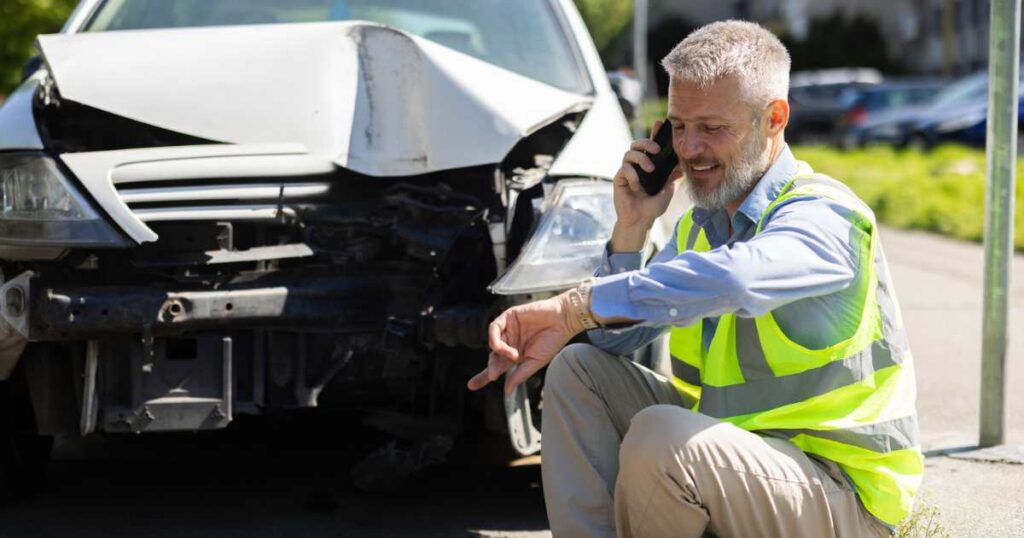
Picture this: one of your employees runs a quick errand in their personal car, picks up supplies, drops off a proposal, and stops by a client’s office. On the way back, they rear-end another vehicle. The other driver is injured. The lawsuit names your employee and your business.
Now picture this: you had no idea this was even a risk.
June is National Safety Month, and while most businesses think about slips, trips, and on-site hazards, one of the most expensive risks your company faces is rolling out of your parking lot every single day. Commercial auto coverage gaps are costing businesses millions and most owners don’t find them until after a claim.
The Three Coverage Gaps That Catch Business Owners Off Guard
- The “Personal Car for Work” Problem
If an employee drives their own vehicle for any business purpose — a client meeting, a supply run, a job site visit — and causes an accident, their personal auto policy will likely deny the claim. Personal policies exclude commercial use. That’s where Hired and Non-Owned Auto (HNOA) coverage steps in. Without it, the liability for that accident falls directly on your business.
According to the National Highway Traffic Safety Administration (NHTSA), there were over 6.1 million police-reported crashes in 2023. Every one of those was someone’s employee, client, or contractor. The odds that a business-related trip is involved at any given moment are not small.
-
The Gap Between What You Own and What You’re Liable For
Many business owners carry a commercial auto policy on vehicles they own — and assume that’s sufficient. It isn’t, if employees are ever using personal vehicles, rented vehicles, or vehicles owned by a subcontractor. HNOA coverage is a separate, often inexpensive addition to your policy that closes this gap entirely, yet countless small and mid-sized businesses are still operating without it.
-
Your Limits Were Set Years Ago
Commercial auto is one of the hardest lines in the 2026 market. Industry analysis indicates base rate increases of 7% to 15% are being applied to commercial auto policies in 2026, driven by social inflation and sharply rising vehicle repair costs tied to supply chain pressure. Jury awards exceeding $10 million are no longer rare in commercial auto cases. If your liability limits haven’t been reviewed in the last two years, there’s a reasonable chance they no longer reflect the real cost of a serious claim.
What “Driving for Business” Actually Means
The legal standard for business use is broader than most owners realize. If your employee is making any trip that benefits the company — even something as routine as grabbing lunch during a work errand — that trip may be considered business use under a plaintiff’s attorney’s argument. Courts have consistently sided with broad interpretations. That $300,000 personal auto limit your employee carries isn’t going to be enough. The lawsuit will target your business.
What Good Commercial Auto Coverage Actually Looks Like
A well-structured program for a small to mid-sized business typically includes:
- Owned vehicle coverage — liability, collision, comprehensive, and uninsured/underinsured motorist
- HNOA coverage — for personal vehicles used for business and rented vehicles
- Appropriate liability limits — reviewed annually against current jury verdict trends
- Driver qualification standards — Motor Vehicle Record (MVR) checks at hire and annually
- Telematics or dashcam documentation — increasingly valued by underwriters and a strong claims defense tool
Underwriters in 2026 are actively separating well-managed fleets from average risks and pricing accordingly. Businesses that invest in driver controls and documentation are seeing better terms. Those that don’t are absorbing rate increases on top of exposure gaps.
Don’t Wait for the Claim to Find the Gap
National Safety Month is a useful prompt to look beyond the job site. Your vehicles, owned, rented, and borrowed, represent a major liability exposure that deserves the same annual review as your property or general liability program. A quick coverage audit with your broker can identify gaps, align limits to current market realities, and put the right documentation in place before something goes wrong.
Explore commercial insurance solutions and specialty programs designed for businesses with complex auto exposures. For current NHTSA crash data, visit nhtsa.gov. For commercial auto market trends, RIMS.org offers ongoing industry analysis.
Ready to close your commercial auto coverage gaps? The team at Tooher-Ferraris has been helping businesses build smarter insurance programs since 1932. Contact us today to schedule a no-obligation consultation.